
Nucleic acid-based vaccines
Nucleic acid-based vaccines use DNA or messenger RNA when coding an antigen. After being injected into a human or animal, plasmid DNA or mRNA enters the cells which will synthetize the antigen and stimulate the immune system. Compared to traditional vaccinations which industrially produce the antigens, nucleic acid-based vaccinations are easier to design and faster to implement.
Advantages
- Not based on pathogens
- Induce a strong immune response
- Do not require adjuvants to enhance the immune response
- Degraded by normal cellular processes
- Modulation of antigen half-life
- Rapid and low-cost manufacturing
Limits
- Requires efficiently transferring the RNA inside the cells
- Requires targeting cells of interest such as dendritic cells
- Requires adjuvants to enhance the efficiency of in vivo delivery
Nucleic acid vaccination is a promising strategy which is opening new avenues. However, it is limited by the current strategies of in vivo delivery which have a low efficacy rate and cannot target the cells of interest.
GEG Tech Platform for vaccination
GEG Tech Platform has been successfully tested to introduce nucleic acids in cells of interest with a high level of biosafety
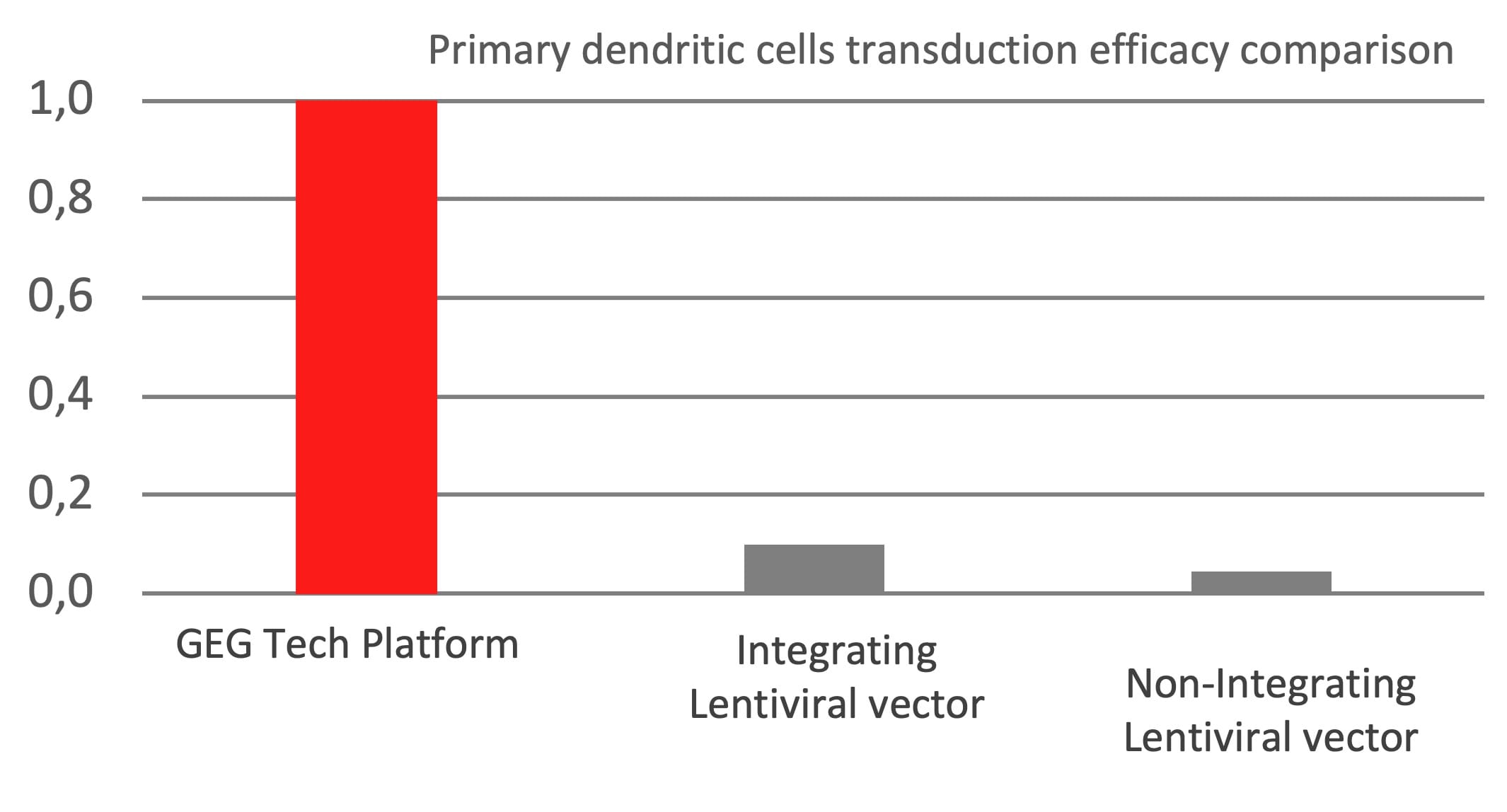
GEG Tech Platform enables human dendritic cells to transduce more effectively than with integrating and non integrating lentiviral vectors.
GEG Tech allows access to its technology platforms to establish collaborations and leverages its know-how to adapt and develop them for its partners’ therapeutic applications.
To find out more please contact us
GEG Tech publication: The Emergence of the Next-Generation Vaccines