Cargo
RNA-ONE can deliver complex RNA-encoded biological functions, including sophisticated genome-editing machinery.
Application Areas
Permanent genetic correction does not require persistent vector-driven expression.
Genome-editing technologies are redefining gene therapy.
For many genetic diseases, the therapeutic objective is no longer necessarily to introduce a gene permanently, but to deliver an editing system long enough to generate a durable genomic correction — and then allow the editing machinery to disappear.
This creates a particularly strong rationale for transient RNA delivery.
RNA-ONE was developed around this principle.
Conventional gene therapy demonstrated that delivering genetic information can durably modify biological function.
New genome-editing technologies now make it possible to act directly on endogenous genetic information.
This changes the role of the vector.
For many precision-editing applications, the vector does not need to establish persistent expression. It needs to deliver sufficient editing activity, to the appropriate cells, for a defined period of time.
The therapeutic effect can then persist independently of the vector.
Transient editor. Durable correction.
For genome engineering requiring the introduction or replacement of larger genetic sequences, complementary DNA-based strategies may remain necessary.
The objective is therefore not to impose one delivery modality, but to match the vector architecture to the genomic intervention.
GEG Tech’s RNA-BEV platform for direct in vivo genome-editor delivery
RNA-ONE is GEG Tech’s proprietary RNA-BEV technology for transient delivery of functional RNA.
Its modular architecture combines three dimensions that are becoming central to in vivo precision gene therapy:
RNA-ONE can deliver complex RNA-encoded biological functions, including sophisticated genome-editing machinery.
Its particle envelope can be engineered to modify cellular tropism and adapt the vector to different target cell populations.
Because RNA is the functional payload, editor expression is transient by design.
Together, these properties provide control over three fundamental parameters:
Cargo. Tropism. Time.
This combination makes RNA-ONE particularly relevant to the transition from ex vivo genetic manipulation toward direct in vivo precision therapy.
GEG Tech has already demonstrated the ability of its RNA-vector technology to deliver genome-editing machinery in vivo.
In collaboration with researchers at the University of California, Irvine, an all-in-one RNA vector carrying a genome-editing system was evaluated in the rd12 inherited retinal disease model associated with RPE65 deficiency.
Following local administration, genome correction was associated with a substantial recovery of retinal function, measured by electroretinography.
This program establishes a key principle for precision gene therapy:
a transient RNA-delivered editor can generate a durable functional consequence in vivo.
It also provides a technological foundation for adapting RNA-ONE to other editors, genetic targets and tissues.
RNA-ONE is not restricted to a single editor or disease model.
The platform can be adapted around the requirements of a partner program through modulation of the RNA cargo, particle envelope, route of administration and expression window.
Its in vivo profile has also been characterized preclinically.
Following local administration, spreading beyond the injection site remains limited.
Following systemic administration, RNA-ONE shows a controlled biodistribution profile, with limited accumulation in major filtering organs such as the liver.
Combined with an engineerable envelope, these properties provide complementary ways to control which cells receive the biological instruction and where it acts.
For direct in vivo therapies, delivery is no longer simply a formulation step.
It becomes part of the therapeutic design.
RNA-ONE has moved beyond the stage of a technology concept.
The platform has already been validated for functional RNA delivery, evaluated in multiple in vivo settings, used to carry genome-editing machinery, and associated with functional rescue in a disease model.
GEG Tech can therefore engage RNA-ONE directly in partner-driven precision gene therapy programs.
Development can start from an existing editing system, genetic target or therapeutic concept and focus on adapting the delivery architecture to the required cargo, cell population, tissue and administration route.
The objective for industrial partners is to build on an existing vector platform and preclinical knowledge base, rather than starting a new delivery technology from discovery.
| Development milestone | Status |
|---|---|
| RNA delivery platform | Established |
| Complex genome-editor cargo | Demonstrated |
| Genome editing in vitro | Demonstrated |
| In vivo delivery | Demonstrated |
| In vivo genome editing | Demonstrated |
| Functional rescue in a disease model | Demonstrated |
| Local biodistribution | Characterized preclinically |
| Systemic biodistribution | Characterized preclinically |
| Envelope / tropism engineering capability | Available |
| Partner-specific program development | Available |
GEG Tech operates through a collaborative studio-lab model.
For precision gene therapy programs, RNA-ONE can be integrated into industrial development around vector design, cargo adaptation, tropism engineering, preclinical evaluation and translational planning.
The collaboration can begin from a partner’s existing genome-editing asset and progress toward an application-specific RNA-ONE configuration.
Bring the editor. We engineer the delivery strategy around the biological objective.
RNA-ONE development in precision gene therapy has progressed through successive technological and preclinical milestones, from genome-editor vectorization to functional in vivo proof of concept.
Platform milestone
October 2024
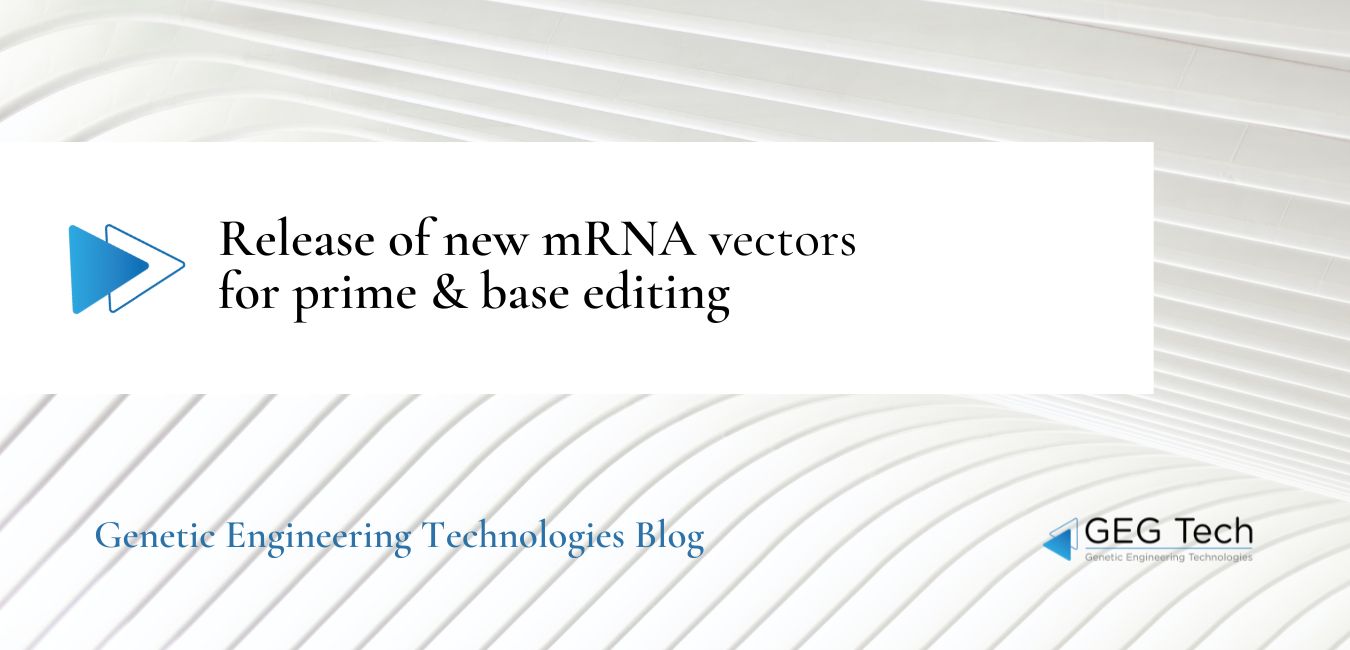
GEG Tech announced the development of its RNA-vector technology for advanced genome-editing systems and the initiation of evaluation programs with leading genome-editing research groups such as University of California or The broad institute of MIT and Harvard.
Read the announcement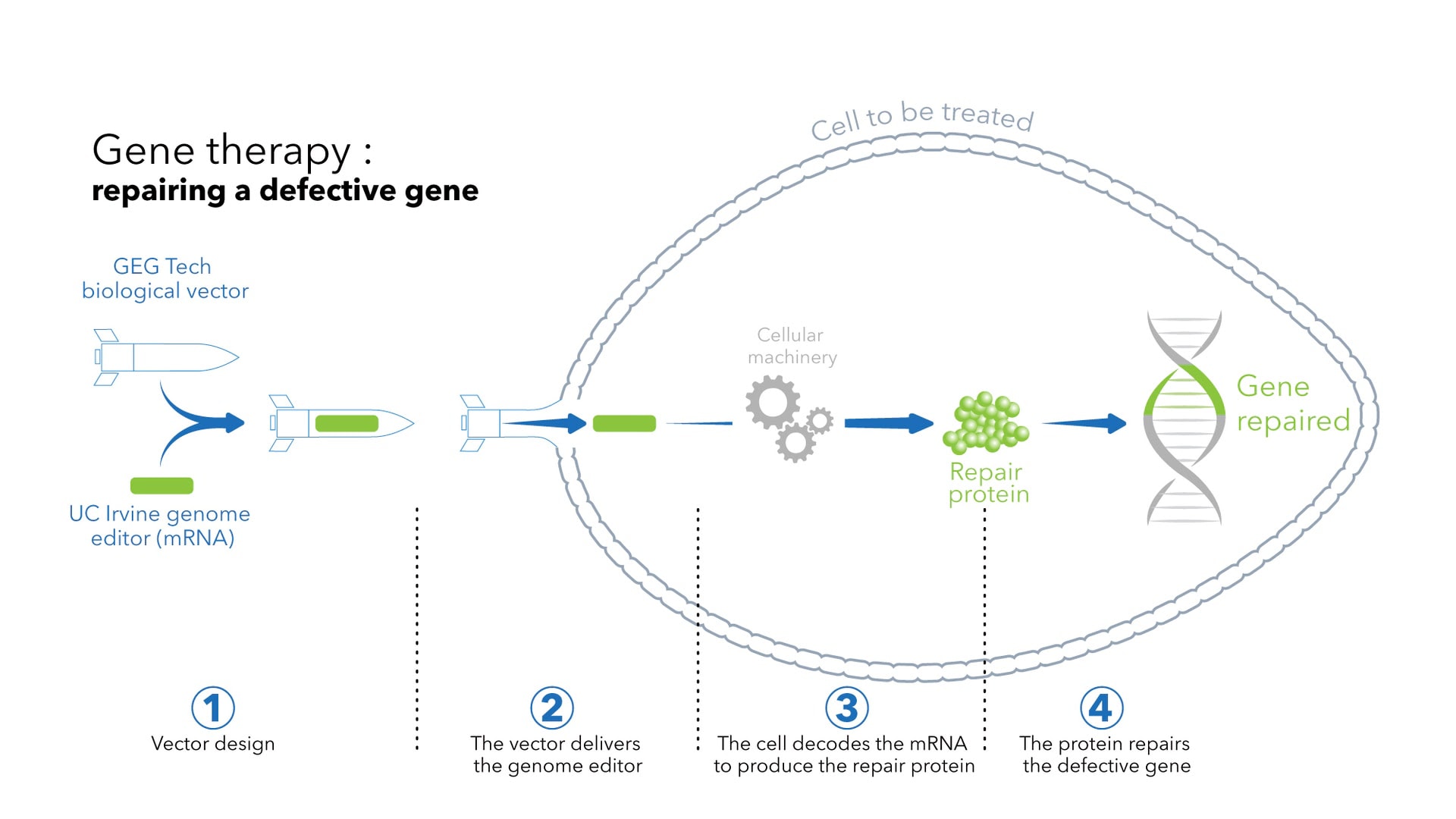
Preclinical milestone
January 2025
GEG Tech and the University of California, Irvine reported in vivo delivery of genome-editing machinery in the rd12 inherited retinal disease model, associated with substantial restoration of retinal function.
Read the press release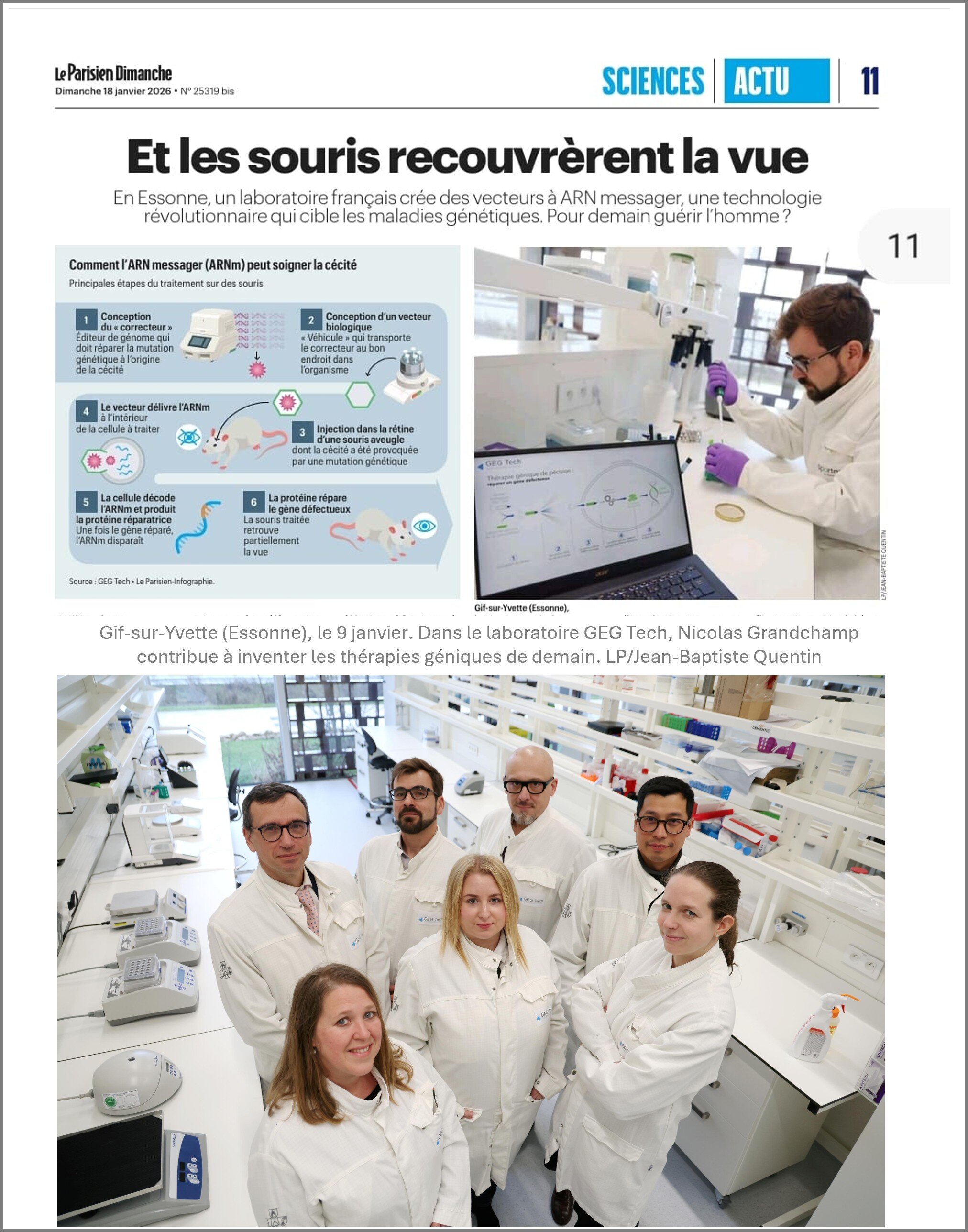
In the media
A feature on GEG Tech, RNA-vector delivery and the development of precision gene therapy with the University of California, Irvine.
Read the articleGenome-editing technologies are progressing rapidly.
For many programs, the next bottleneck is no longer the ability to design an editor, but the ability to deliver it efficiently into the appropriate cells while controlling tissue distribution and editor exposure.
RNA-ONE provides an existing technological foundation for addressing that challenge.
Discuss a gene therapy programExplore RNA-ONEAll application areas